Terms Used Often, but Often Mis-used
Aside from how our buddies might use these terms when they talk golf, these four are also regularly misused by TV commentators and others who speak authoritatively about golf. Understanding these terms can be helpful to every golfer. Let's review swing tempo, rhythm, acceleration, and speed.
Swing Tempo
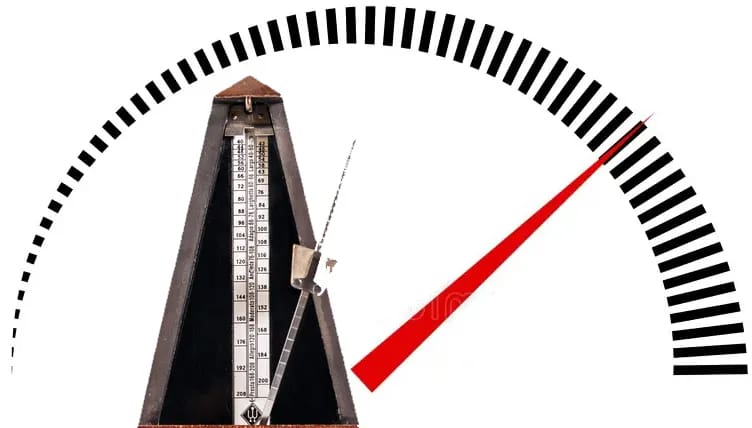
When you clap your hands to the beat of the music, the clap is faster for the upbeat tempo and slower for the downbeat tempo. Jon Rahm’s swing is completed in a shorter time than Chris Kirk’s. Chris has a slower tempo.
Rhythm
Clapping your hands to a song, you find that the clapping does not get faster or slower. Rhythm refers to the consistency of the tempo. A rhythmic golf swing is one with a consistent tempo.
Acceleration
Refers to the rate of change in the speed of the swing. The forward swing starts slowly, and then it gets faster. While the speed of the forward swing is faster as it arrives at ball contact, the rate of change should be consistent. Observers will often describe a swing with consistent acceleration as being “smooth” whereas uneven acceleration could be described as “jerky”.
Speed
While clubhead speed is often referred to, more significant is ball speed. Ball speed is a function of clubhead speed and the quality of contact being achieved. Ball speed increases as: 1) the clubhead weight increases, 2) the coefficient of restitution increases, 3) the path and face angle coincide, and 4) the centeredness of contact. As pertains to speed, I offer you the words of Bobby Thompson, a former world record holder for land speed: “Too much speed is never enough”.
Bottom Line: The rate at which we speak, eat, and walk varies by individual—as does their swing tempo. However, the rhythm and acceleration are consistent in the performance of an effective golf swing. Ball speed is a good thing. If you’d like help building a more repeatable swing, take a look at our golf lessons in St. Louis.
Words on a page can only take a golf swing so far. If your understanding has improved but your results haven’t, that’s rarely a limit of your ability — it’s a limit of what writing can do. When you’re ready to close that gap, let’s work on it together, in person or online. Contact us to set up a lesson.